Frequently Asked Questions About Stump Grinding: What It Is, Costs, Benefits, and How It Works

Frequently Asked Questions About Stump Grinding: What It Is, Costs, Benefits, and How It Works
Stump grinding is the mechanical process of reducing a tree stump to small wood chips using a rotating cutting wheel, and understanding how it works helps homeowners make safe, cost-effective choices for yard restoration and pest control. This article explains the mechanics, equipment, benefits, cost drivers, and local permit considerations relevant to Volusia County property owners, so you can decide when to grind, remove, or replant. Many homeowners worry about safety hazards, lingering roots, insect attraction, or how soon they can reuse the space; this guide addresses those concerns with practical steps, timelines, and local context. You will learn what machines professionals use, why licensed operators reduce risk, which factors drive price, and how grinding compares to full stump removal. The article also maps replanting timelines, soil-prep checklists, and Florida-specific environmental concerns so you can plan landscaping or construction after stump work. Read on for actionable answers to common stump grinding questions, clear comparisons of methods, and recommended next steps for homeowners in Volusia and neighboring counties.
What Is Stump Grinding and How Does It Work?
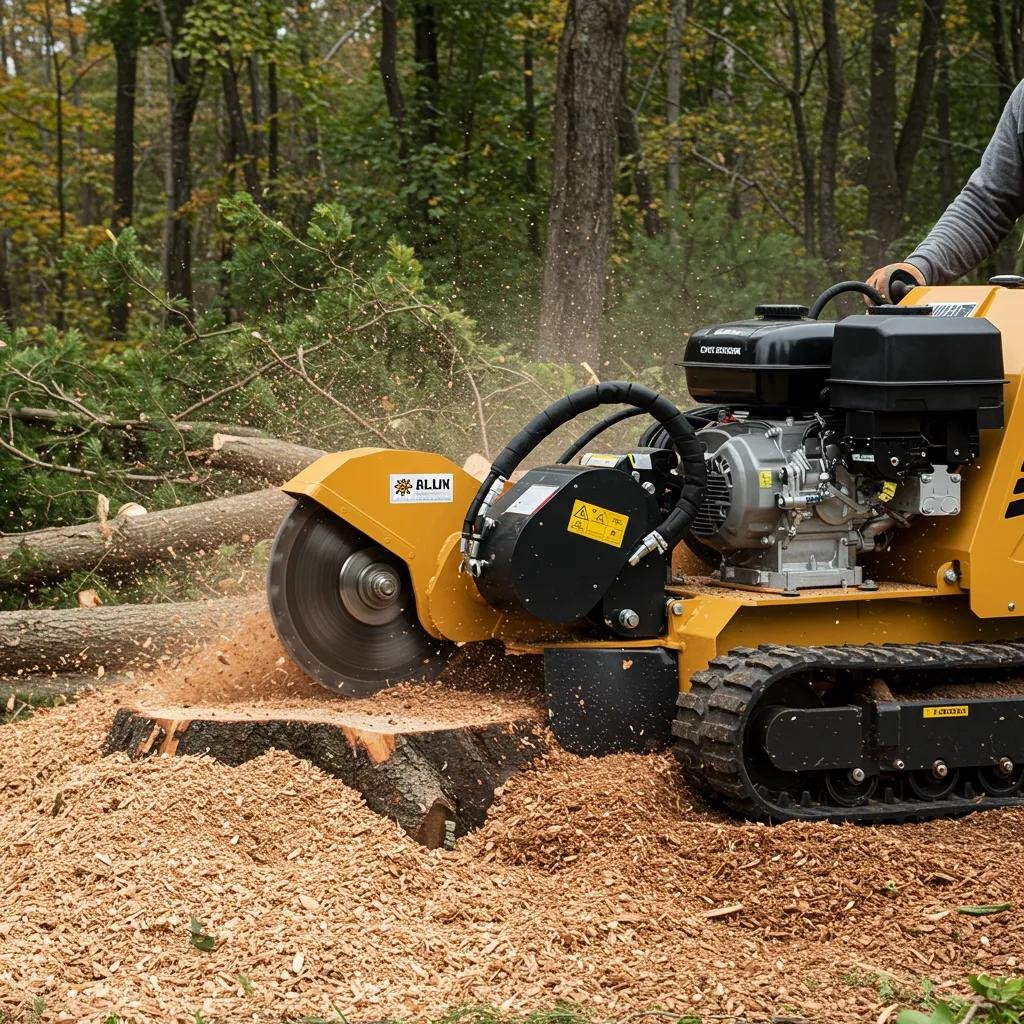
Stump grinding is a targeted arboriculture service that uses a high-speed cutting wheel fitted with carbide teeth to mechanically chip away a stump until the majority of the visible trunk and a portion of the root collar are removed, improving safety and site usability. The mechanism works by bringing the rotating cutting wheel into contact with the wood; each carbide tooth shears thin layers of wood while the operator incrementally advances the grinder to remove material down to the desired depth. The result is a cavity filled with coarse wood chips and fragmented root pieces that can be reused on-site or removed, and the exposed area can be backfilled and graded for planting or construction. Understanding this mechanism clarifies why grinding is faster and less disruptive than full extraction for many homeowner scenarios and why equipment selection matters for accessibility and depth.
Volusia Bobcat and Tree Service provides professional stump grinding services with equipment appropriate to site conditions, giving homeowners confidence that the grinding process will be executed efficiently and safely by trained operators. This brief credibility note highlights that professionals use the right grinder for each job, which reduces risk and speeds clean-up for property owners.
What equipment is used in professional stump grinding?

Professional stump grinding employs a range of stump grinder types—walk-behind, self-propelled, truck-mounted, and high-capacity stationary grinders—each suited to different stump sizes, access constraints, and job scales. Walk-behind grinders are compact and ideal for tight yards and small stumps, while larger self-propelled or truck-mounted grinders handle wide diameters and tougher root systems more quickly. The cutting wheel, fitted with carbide teeth, is the meronym that performs the actual cutting; engines deliver rotational torque, and hydraulic or belt drives transfer power to the wheel. Support equipment often includes bobcats or mini-excavators for chip handling, chippers for larger debris, and safety barriers or spotters to protect people and structures on site.
Typical grinder types and when to use them:
- Walk-behind grinders: best for compact yards and small stumps.
- Self-propelled grinders: efficient for medium-to-large stumps with moderate access.
- Truck-mounted grinders: suited for large stumps, commercial jobs, or difficult terrain.
These equipment choices affect time on site and the degree of surface disruption, which leads directly into how the grinding action removes the stump itself.
How does the stump grinding process remove tree stumps?
Grinding removes a stump by repeatedly engaging the cutting wheel with the wood, shaving thin layers until the stump is reduced below grade; operators typically start at the top and work in a circular pattern toward the root flare to minimize vibration and protect surrounding soil. Carbide teeth chip the wood into fragments that are conveyed into a pile; operators adjust wheel depth, angle, and feed rate to maintain control and prevent damage to nearby hardscapes or utilities. Effective grinding requires monitoring root behavior—larger roots are cut into fragments that remain underground while the visible trunk is removed—and planning for chip handling or removal. Careful execution reduces the chance of residual trip hazards and prepares the area for backfilling and grading.
How deep does stump grinding typically go?
Typical stump grinding depths range from slightly below ground level to about 6–12 inches under grade for standard yard projects, and operators can grind deeper—often several inches more—when homeowners plan to replant or require removal for construction. Deeper grinding exposes more root fragments and may accelerate decomposition but increases time and cost because larger volumes of chips and root material must be handled. Decisions about depth hinge on intended site use: shallow grinds suffice for aesthetics and safety, while deeper grinds or full extraction are appropriate when installing a patio or replacing soil for new trees. These depth considerations influence both the timeline to replanting and the post-grind soil preparation needed.
What happens to the wood chips produced during stump grinding?
Wood chips produced by grinding typically form a substantial pile that can be managed in several ways: reused on-site as mulch or filler, mixed into compost, hauled away for disposal, or offered to neighbors, depending on homeowner preference and local disposal rules. In Florida’s humid climate the chips decompose relatively quickly and can temporarily tie up soil nitrogen if mixed directly into planting beds, so best practice is to use chips as surface mulch or incorporate them with compost and additional topsoil after decomposition begins. Operators often offer chip removal or spreading services; leaving chips in place can save disposal fees but requires planning for soil amendments prior to replanting. Proper handling of chips balances environmental considerations and practical reuse for landscaping.
This breakdown of process and equipment components clarifies why professionals choose specific grinders for different jobs and what homeowners can expect after the grind.
What Are the Benefits of Professional Stump Grinding?

Professional stump grinding delivers practical benefits for safety, aesthetics, pest control, and site reuse by combining mechanical efficiency with trained operation and appropriate equipment selection. Licensed operators reduce risks to people and property through site evaluation, controlled machinery use, and adherence to safety protocols, which protects lawns, underground utilities, and nearby structures. Grinding also speeds yard restoration by converting stumps into manageable wood chips that can be removed or reused, allowing homeowners to reclaim planting space, prepare for hardscapes, or improve curb appeal without large excavations. These advantages make grinding a cost-effective option for many residential situations where full root removal is unnecessary.
For homeowners seeking professional services, Volusia Bobcat and Tree Service emphasizes licensed and insured operations, safety-first procedures, and free estimates to help property owners evaluate options; these business features support the practical benefits of hiring a trained team. This short callout underscores that professionals provide both equipment expertise and clear cost assessments for local projects.
How does stump grinding improve property safety and aesthetics?
Grinding eliminates trip hazards, reduces the risk of lawn mower damage, and restores a level surface that improves both safety and the visual continuity of a yard, helping properties retain or improve curb appeal. By removing the protruding stump and tapering the surrounding soil, grinding prevents accidental injuries and protects equipment, and it creates a smoother canvas for sod, planting, or hardscape installation. Aesthetically, the absence of rotting stumps minimizes eyesores and supports consistent landscaping design. These outcomes translate to practical homeowner benefits—fewer maintenance headaches and safer outdoor spaces—making grinding a priority after tree removal.
Safety and aesthetic improvements:
- Eliminates trip and equipment hazards.
- Restores grade for lawn and landscape continuity.
- Reduces visual decay and enhances property appearance.
These visual and safety improvements segue into pest and regrowth considerations that homeowners often worry about.
Can stump grinding prevent pest infestations and tree regrowth?
Grinding reduces the volume of woody material that attracts termites, carpenter ants, and wood-boring insects, thereby lowering the habitat availability for these pests; however, it cannot completely remove subsurface roots that may sustain some pest activity over time. In Florida’s warm, humid environment, decaying stumps can become a focal point for pests if left intact, so removing the above-ground portion and managing chips helps reduce that risk. Grinding also decreases the chance of resprouting from stump collars for many species, but aggressive suckering species may still produce sprouts from remaining root structures unless treated or removed at depth. Therefore, grinding is an effective pest-reduction strategy when paired with ongoing monitoring and, if necessary, targeted follow-up treatments.
How does stump grinding help reclaim space for landscaping?
Grinding clears space quickly and with less surface disruption than full removal, enabling homeowners to regrade, lay sod, plant shrubs, or install patios and walkways in a shortened timeframe. After grinding, the cavity is backfilled with topsoil and compacted to match surrounding grade, providing a stable base for new landscaping features. Reclaimed space can be tailored for turf restoration, vegetable gardens, planting beds, or hardscape elements depending on depth of grinding and soil preparation. Planning for amendments and proper compaction after grinding ensures long-term stability and promotes healthy new plantings.
These benefits demonstrate practical outcomes for common homeowner goals and help determine whether grinding or removal is the better choice for a given property.
How Much Does Stump Grinding Cost in Volusia County?
Accurate pricing for stump grinding depends on multiple variables—stump diameter, root mass, access, grinder type required, disposal needs, and travel logistics—so an on-site estimate is necessary to produce a reliable quote for Volusia County properties. Primary cost drivers include stump size (diameter and depth), accessibility (yard gates, slopes, obstacles), species/root complexity, and whether chip removal or spreading is requested. Local considerations such as travel from service hubs and disposal options can also influence price estimates. For homeowners in Volusia, Seminole, Flagler, and Orange Counties (including Deltona and nearby cities), requesting a free on-site estimate is the best way to determine exact cost and any available promotions.
Volusia Bobcat and Tree Service offers free estimates and may promote special offers such as “Get a Free Stump Grind with Any Removal,” which can affect overall project value; homeowners should confirm eligibility and details during the estimate process. To get an accurate, no-cost assessment of stump grinding needs and available specials, contact the provider via their listed web presence or Google Business Profile for next steps.
Intro to the cost-driver table: The table below breaks down common stump attributes and how each typically impacts price so homeowners can understand which factors most influence estimates.
| Stump Characteristic | How It Affects Price | Typical Impact |
|---|---|---|
| Diameter (small, medium, large) | Larger diameter requires more grinding time and larger equipment | Low → High |
| Accessibility (open yard vs. restricted) | Restricted access may require smaller grinders and more labor | Low → High |
| Root complexity (shallow vs. deep roots) | Extensive root systems increase time and residual material to handle | Low → High |
| Chip handling (spread vs. remove) | Removal or hauling adds disposal cost and labor | Moderate → High |
| Location (urban vs. rural travel) | Travel time and permits may increase overall cost | Low → Moderate |
This table highlights that size and access are the dominant cost drivers; homeowners should use this to prepare for discussions during free estimates.
What factors affect the price of stump grinding?
Key variables that increase or decrease stump grinding cost include stump diameter, site access, adjacent structures, root system complexity, required grinding depth, and disposal choices; each variable changes labor, time, and equipment demands. For example, a large stump with many lateral roots near a patio may require slower, careful grinding and possibly manual root trimming, increasing cost compared with an isolated small stump in an open yard. Accessibility issues such as narrow gates may necessitate bringing equipment in pieces or using smaller grinders, which typically raises labor costs. Understanding these drivers helps homeowners plan budgets and anticipate what to ask during an on-site assessment.
Major cost factors to discuss with a provider:
- Stump diameter and root mass.
- Accessibility and equipment needs.
- Disposal and chip handling preferences.
These factors also determine whether grinding or full removal is the more economical approach for a given property.
Are there any special offers or free estimates available?
Many local providers advertise free on-site estimates to evaluate stumps and provide transparent pricing tailored to site conditions; free estimates eliminate guesswork and help homeowners compare grinding versus removal options. According to local service information, a promotion such as “Get a Free Stump Grind with Any Removal” may be available and could meaningfully alter the cost calculus when combining services. Homeowners should confirm eligibility, blackout dates, and specific conditions when requesting an estimate to ensure the promotion applies to their project. Requesting a free estimate is the recommended first step to obtain precise pricing for Volusia County projects and to learn about current offers.
This clarity about estimates and offers leads naturally into a direct comparison of grinding vs full removal to help choose the right method.
How does stump grinding cost compare to stump removal?
Grinding generally costs less than full stump removal because it requires less excavation, smaller crews, and less heavy excavation equipment; removal involves extracting the root ball, backfilling with soil, and possibly greater landscape repair. Grinding is typically faster and creates fewer surface disturbances, making it the economical choice for homeowners who want to reclaim planting space or improve safety. Removal is more appropriate for heavy construction, complete root eradication, or where deep root systems interfere with foundations or utilities. Long-term considerations include potential regrowth and the end goals for the site—if heavy construction is planned, removal may be the cost-justified option.
| Method | Time Required | Cost Impact | Site Disruption |
|---|---|---|---|
| Stump Grinding | Short to moderate | Lower | Low-moderate |
| Stump Removal (excavation) | Moderate to long | Higher | High |
| Hybrid (grind + partial removal) | Moderate | Moderate | Moderate |
Comparing these methods helps homeowners match their budget and site goals to the appropriate approach.
What Is the Difference Between Stump Grinding and Stump Removal?
Stump grinding and stump removal address the same core problem—eliminating a tree stump—but they differ in technique, extent of root extraction, site disruption, and suitability for future construction or planting needs. Grinding mechanically chips the stump down to below grade and leaves most roots in place to decompose, making it fast and less invasive, whereas removal extracts the stump and main roots from the ground, leaving a void that requires backfilling. Because these methods yield different site conditions, selection depends on homeowner objectives such as immediate construction, prevention of regrowth, or desire for minimal landscape disturbance. Understanding procedural differences informs both cost expectations and post-service planning.
How do stump grinding and stump removal processes differ?
Grinding uses a cutter wheel to abrade the stump into chips with minimal excavation, while removal employs digging, winching, or heavy machinery to extract the root system and trunk from the soil. Grinding typically results in a pile of chips and a shallow cavity for backfilling; removal creates a larger hole but removes most roots. Equipment differs markedly: grinders focus on the cutting wheel and engine power, while removal relies on excavators, backhoes, or large winches to free and lift root masses. Process-wise, grinding is faster and less disruptive to surrounding hardscape; removal takes longer and requires more soil restoration.
What are the pros and cons of stump grinding versus removal?
Pros of grinding include speed, lower cost, and reduced landscape disturbance, while cons include residual roots that will decompose over time and potential for some regrowth in certain species. Pros of removal include complete root extraction and immediate readiness for heavy construction, while cons include higher cost, extensive surface disruption, and longer restoration time. Homeowners should weigh priorities—budget and minimal disturbance favor grinding; total root eradication and construction readiness favor removal.
Pros of grinding:
- Faster completion and lower cost.
- Less disruption to lawns and hardscapes.
- Chips can be reused as mulch.
Pros of removal:
- Full root extraction for construction readiness.
- Eliminates most regrowth risk.
- No large root fragments remain underground.
Choosing between these methods depends on the intended use of the site and tolerance for short-term disruption.
Which option is better for different property needs?
For lawn restoration, garden beds, or cosmetic improvements, grinding is usually the recommended approach because it reclaims space quickly with minimal disturbance. For installing heavy structures like foundations, decks, or large patios, full removal is often preferable to avoid future settling or root interference. In cases with aggressive resprouting species or where pests are a primary concern, a deeper grind or selective removal may be advised. Consulting a professional to evaluate site goals, soil conditions, and species specifics yields the best recommendation.
This decision framework connects directly to replanting timelines and soil preparation needs discussed next.
Can I Replant a Tree After Stump Grinding?
Yes—replanting after stump grinding is feasible, but timing and site preparation matter to ensure new trees establish successfully; recommended waiting periods and specific soil amendments help mitigate issues from residual wood chips and decomposing roots. Replanting timelines depend on grind depth, the size of remaining roots, and whether wood chips are incorporated into the backfill. Typical guidance suggests waiting months for small plants and up to a year for larger trees unless deeper grinding and thorough soil replacement are performed. Proper soil preparation, grading, and amendment restore nutrient balance and reduce the risk of nitrogen immobilization from decomposing wood.
How long should I wait before replanting?
Waiting periods vary: small shrubs and groundcovers can often be planted within a few months after a standard grind once the area is backfilled and settled, while new trees benefit from waiting 6–12 months to allow substantial root decomposition and soil stabilization. Faster timelines are possible if the stump was ground deeper and the cavity was backfilled with high-quality topsoil and compost, which reduces the decomposition impact. Factors that accelerate or delay readiness include depth of grinding, amount of chip material left in planting zone, and local climate—Florida’s warmth accelerates decomposition but can also lead to temporary nitrogen drawdown. Planning for a conservative wait time helps ensure longer-term tree health.
What soil preparation is needed after stump grinding?
After grinding and backfilling, soil preparation should include removing large root fragments, adding topsoil, mixing in compost to improve structure, and lightly compacting to match surrounding grade; avoid burying large quantities of fresh chips in the planting root zone. Amending backfill with well-aged compost and a balanced topsoil reduces the risk of nutrient imbalances and improves moisture retention. For tree planting, create a planting berm or hole with quality planting soil and ensure root flare sits at the proper grade to prevent girdling. Monitoring soil pH and nutrient levels before planting large specimens helps avoid early growth problems.
Soil prep checklist:
- Remove large woody fragments from planting zone.
- Backfill with quality topsoil and compost mixture.
- Grade and lightly compact to match surrounding surface.
These preparation steps support successful replanting and long-term tree establishment.
Are there tree species that regrow after stump grinding?
Certain species are more prone to resprouting from remaining roots—even after grinding—so identification and targeted management are important; aggressive resprouters may require deeper grinding, removal, or follow-up treatments to prevent regrowth. Species that typically resprout often send up suckers from roots; mechanical grinding reduces but does not eliminate this potential. Management strategies include monitoring for sprouts, timely mechanical removal of shoots, or consulting a professional for appropriate follow-up. Understanding species behavior informs whether grinding alone will suffice or if additional measures are needed to prevent regrowth.
These replanting and species considerations naturally lead into safety practices and reasons to hire professionals for stump work.
Is Stump Grinding Safe and Why Should I Hire a Professional?
Stump grinding carries inherent hazards—flying debris, equipment entanglement, noise, and risk to underground utilities—so professional crews follow strict safety protocols, use proper PPE, and evaluate site risks before beginning work. Professionals conduct utility locates, establish exclusion zones, wear protective equipment, and secure loose debris to protect bystanders and structures. The specialized nature of stump grinders, including powerful engines and flying chips, makes operator training essential to prevent injury and property damage. Hiring licensed and insured professionals transfers liability and provides recourse if damage occurs, which many homeowners find valuable for peace of mind.
What safety measures do professionals follow during stump grinding?
Professional teams perform a site assessment to mark utilities, establish safe working perimeters, position spotters, and use PPE—eye and ear protection, hard hats, and protective clothing—while conducting machine checks before operation. They also plan chip containment and traffic control where needed, and place barriers or signage to keep children and pets away from the work zone. Equipment inspections include checking carbide teeth, guards, and hydraulic systems to reduce the chance of malfunction. Clear communication and staged operations lower the risk of accidents and ensure that the grinding process proceeds smoothly.
Typical professional safety steps:
- Pre-job site utility and hazard assessment.
- PPE for all crew members and spotters.
- Equipment inspection and controlled chip management.
These measures contrast with DIY risks and form the basis for why many homeowners hire pros.
What risks are involved with DIY stump grinding?
DIY attempts risk injury from improper use of grinders, insufficient PPE, and lack of experience managing chip trajectories and hidden hazards such as buried utilities or dense root masses. Amateur operators may also damage nearby irrigation systems, underground cables, or hardscapes due to inattention or incorrect equipment choice. Rental grinders can be deceptively powerful, and third-party assistance is often needed for chip removal and safe maneuvering in tight yards. These potential risks make professional services an attractive option for many property owners.
How does hiring licensed and insured experts benefit property owners?
Hiring licensed and insured professionals provides liability protection, documented workmanship standards, and trained operators who minimize property damage and health risks; insurance also covers accidental damage that might occur during operations. Licensing indicates adherence to local regulatory and safety standards, while insurers provide financial recourse should unforeseen incidents arise. For homeowners, this combination reduces stress, ensures compliance with best practices, and often includes guarantees or follow-up services that DIY approaches cannot offer. These practical benefits justify the premium many homeowners accept for professional stump work.
These safety and liability considerations naturally lead into local permit rules and environmental considerations in Volusia County.
Do I Need a Permit for Stump Grinding in Volusia County?
Permitting requirements for stump grinding vary by jurisdiction and project scope; in many cases an isolated stump grind does not require a permit, but larger land-clearing activities, projects impacting wetlands or protected species, or combined tree removal and grinding for redevelopment may trigger local permits. Homeowners should check with county building, land-use, or environmental offices to verify requirements for their specific parcel, and consider permitting when clearing multiple trees or altering drainage patterns. Understanding local triggers helps avoid fines or required remediation, especially in environmentally sensitive zones common in parts of Volusia County.
What are the local regulations regarding stump grinding permits?
Typical permit triggers include land clearing that exceeds a certain area, work within designated wetlands or conservation zones, or projects associated with construction that alter impervious surfaces or change runoff patterns; isolated stump grinding for yard restoration commonly falls below permitting thresholds but exceptions exist. Volusia County and neighboring jurisdictions may have unique rules for protected species or tree preservation ordinances that affect whether permits are necessary. Homeowners should consult county planning or environmental offices for definitive guidance based on their site and project scope.
How can I get help with permit requirements?
Professionals can assist by evaluating the project during a site visit, identifying triggers that may require permits, and preparing documentation or site plans to support permit applications; this reduces homeowner legwork and helps ensure compliance. Ask a provider to include permit review in the estimate or to recommend county contacts for confirmation. A licensed contractor experienced with local rules can often advise on best practices and whether a formal permit application is warranted.
Steps to confirm permits:
- Contact county building/land-use offices for parcel-specific rules.
- Request a professional site evaluation for permitting advice.
- Prepare documentation if the project triggers land-clearing or wetland rules.
These steps make permit navigation more straightforward for homeowners planning tree or stump work.
Are there environmental considerations for stump grinding in Florida?
Florida-specific concerns include wetlands protections, potential impacts to native species and habitats, and best practices for wood-chip reuse given the state’s humid climate; chips should not be deposited where they will smother native understory or impact drainage. Reusing chips as mulch is generally acceptable when applied away from sensitive habitats and when mixed or aged before incorporation into planting zones to avoid nitrogen drawdown. Wetlands, coastal buffers, and conservation areas often have stricter rules, and work near these areas may require ecological review or mitigation plans. Best practice is to minimize disturbance, manage chips responsibly, and consult authorities when work approaches regulated areas.
For homeowners in Volusia, Seminole, Flagler, and Orange Counties (including Deltona and other local cities), Volusia Bobcat and Tree Service can provide free estimates and on-site guidance that includes permit considerations and environmental best practices and can help coordinate next steps through their local knowledge and evaluation during the estimate.
This final local guidance invites homeowners to obtain a no-cost assessment and professional advice tailored to their site and project goals.
Need help with your trees? Visit Volusia Bobcat & Tree Service or call (386) 675-7898 for a free estimate.